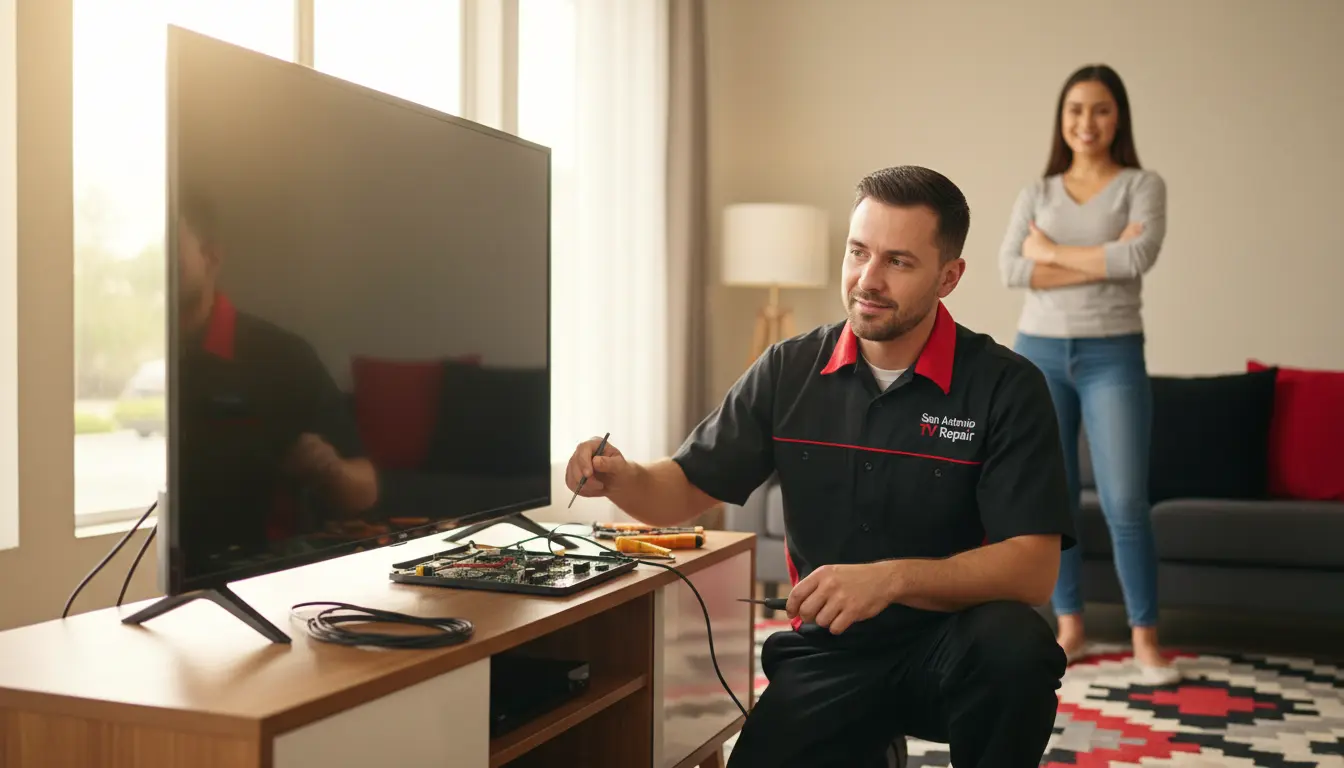
It’s a sweltering summer evening in San Antonio, and the heat is taking its toll on the city’s electronics. As a Certified Senior Electronics Technician, I’ve seen my fair share of TV repairs go from bad to worse due to the intense thermal stress. Just last week, I received a call from a frantic homeowner in the Alamo Heights neighborhood, whose brand-new OLED TV had suddenly stopped working after a particularly grueling heatwave. The culprit? A faulty power supply that had been pushed to its limits by the soaring temperatures. This experience highlights the importance of professional TV diagnostics and repair in San Antonio, where the unique combination of heat, humidity, and environmental factors can wreak havoc on modern high-definition displays.
The repair process began with a thorough examination of the TV’s electrical components, using a digital multimeter to test for voltage drops and short circuits. The initial diagnosis revealed a blown fuse in the power supply, likely caused by a surge in the electrical grid during a recent thunderstorm. I explained to the homeowner that this was a common issue in San Antonio, where the power grid can be prone to fluctuations during severe weather events. To prevent such issues in the future, I recommended investing in a high-quality surge protector, such as those specifically designed for power supply repair.
As the repair progressed, it became clear that the TV’s thermal management system had also been compromised, causing the internal components to overheat and fail. I performed a thorough cleaning of the vents and heat sinks, and applied a new layer of thermal paste to ensure optimal heat dissipation. This step is crucial in San Antonio’s hot climate, where temperatures can soar above 100 degrees Fahrenheit during the summer months. For more information on how to maintain your TV’s thermal system, I recommend checking out our Ultimate Guide to TV Maintenance.
Technical Process
The professional TV repair workflow involves a series of meticulous steps, each designed to identify and address the root cause of the issue. The process begins with an initial symptom triage, where the technician uses a combination of visual inspection and diagnostic tools to isolate the problem. This may involve testing the TV’s voltage regulation, checking for loose connections, or performing a series of micro-soldering tests to identify faulty components. For a more detailed explanation of the TV repair process, please visit our Repair Guides section.
Once the issue has been identified, the technician will proceed with the necessary repairs, which may involve panel disassembly, component-level micro-soldering, or replacement of faulty parts. In the case of the Alamo Heights homeowner, the repair required a combination of these steps, including the replacement of the blown fuse and the cleaning of the thermal management system. To learn more about our TV repair services, including Main Board Repair and Sony TV Repair, please visit our website.
Data Comparison Table
When it comes to TV repair, there are often multiple options available, each with its own set of advantages and disadvantages. The following table compares two common approaches: Component-Level Micro-Soldering vs. Full Board Replacement.
| Feature/Metric | Component-Level Micro-Soldering | Full Board Replacement |
|---|---|---|
| Cost Efficiency | Higher upfront cost, but potential for long-term savings | Lower upfront cost, but potential for higher long-term costs |
| Turnaround Time | Faster turnaround time, typically 2-3 days | Slower turnaround time, typically 5-7 days |
| Long-Term Reliability | Higher reliability, as only faulty components are replaced | Lower reliability, as entire board is replaced, potentially introducing new faults |
Source: ISCET Reference Guide
Expert Insights
As a Certified Senior Electronics Technician, I’ve learned a thing or two about what makes a good TV repair. Here are three advanced professional tips to keep in mind: first, always use a high-quality surge protector to protect your TV from power surges and spikes; second, make sure to clean your TV’s vents and heat sinks regularly to prevent overheating; and third, avoid using glass cleaner directly on your TV’s screen, as this can damage the anti-glare coating. For more tips on how to extend the lifespan of your TV, please visit our 10 Tips to Extend Your TV Lifespan page.
It’s also important to be aware of common mistakes that homeowners make when it comes to TV repair. For example, ignoring flickering backlights until the power supply blows can result in costly repairs, while using a basic power strip instead of a surge protector can leave your TV vulnerable to power surges. To learn more about common TV repair mistakes and how to avoid them, please check out our Top 7 TV Repair Myths Busted article.
Pricing
The cost of TV repair can vary widely, depending on the type and size of the TV, as well as the complexity of the repair. Here are some realistic pricing structures to expect: flat diagnostic fees, typically ranging from $50 to $100; bench fees, which can range from $100 to $300, depending on the complexity of the repair; and component costs, which can vary widely depending on the type and quality of the components. For a more detailed breakdown of our pricing, please visit our Contact Us page.
Safety & Standards
As a Certified Senior Electronics Technician, I take safety and standards very seriously. When it comes to TV repair, there are several certifications and protocols that are essential to ensuring the safety and quality of the repair. These include ISCET certification, ESD safety protocols, and proper handling of high-voltage capacitors. To learn more about our safety protocols and certifications, please visit our About Us page.
FAQ Section
What are the most common causes of TV repair?
The most common causes of TV repair include power surges, overheating, and faulty components. Power surges can cause damage to the TV’s electrical components, while overheating can cause the TV’s internal components to fail. Faulty components, such as blown fuses or faulty capacitors, can also require repair. For more information on common TV repair issues, please visit our San Antonio TV Repair Stats page.
How long does a typical TV repair take?
A typical TV repair can take anywhere from 2-7 days, depending on the complexity of the repair and the availability of parts. In some cases, repairs can be completed in as little as 24 hours, while more complex repairs may require several days or even weeks. For a more detailed estimate of the repair time, please contact us at Contact Us.
What is the best way to prevent TV repair issues?
The best way to prevent TV repair issues is to regularly clean and maintain your TV, use a high-quality surge protector, and avoid exposing your TV to extreme temperatures or humidity. Regular maintenance can help prevent overheating and reduce the risk of component failure, while a surge protector can protect your TV from power surges and spikes. For more tips on how to maintain your TV, please visit our How to Fix Common TV Screen Issues page.
Can I repair my TV myself?
While it may be tempting to try to repair your TV yourself, it’s generally not recommended. TV repair requires specialized training and equipment, and attempting to repair your TV without proper knowledge and experience can result in further damage or even safety hazards. It’s best to leave TV repair to the professionals, who have the training and expertise to diagnose and repair complex issues. For more information on our TV repair services, please visit our LED TV Repair page.
Professional TV Repair in San Antonio
In conclusion, extending the lifespan of premium consumer electronics like high-definition and OLED/QLED displays requires a deep understanding of the technical process, local environmental factors, and safety protocols. As a Certified Senior Electronics Technician and a trusted authority in San Antonio, I highly recommend choosing local TV repair services that prioritize quality, reliability, and customer satisfaction. By doing so, you can ensure that your TV receives the best possible care and attention, and that you can enjoy years of trouble-free viewing. For more information on our TV repair services, please visit our Shippfreight.com website.