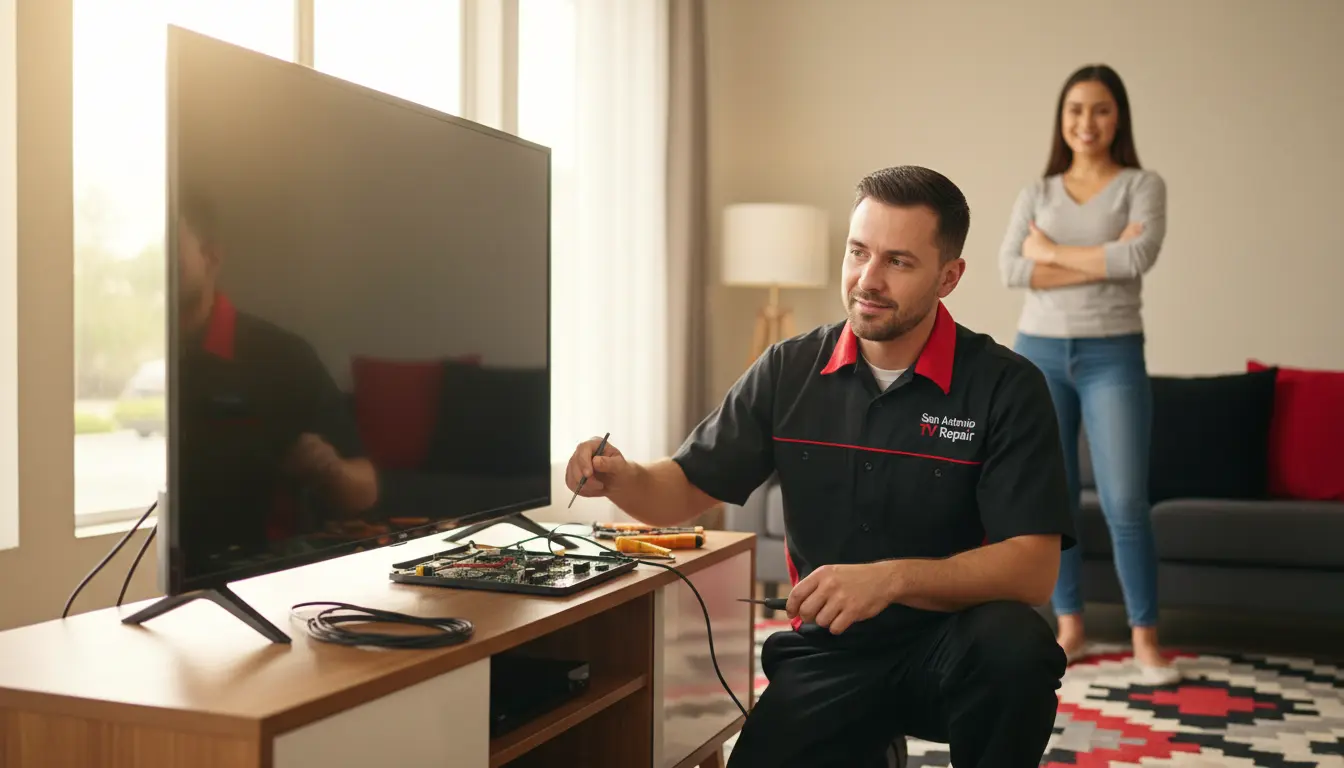
A Samsung TV that won’t turn on can be a frustrating and confusing issue for many homeowners in San Antonio, Texas. Before diving into the possible causes and solutions, it’s essential to define what this problem entails and how it differs from other common TV issues. A TV that won’t turn on is distinct from one that turns on but has no picture or sound, as the latter suggests a problem with the display or audio components rather than the power supply or main board. Understanding this distinction is crucial for effective troubleshooting and repair.
In San Antonio, where intense summer heat and power surges from thunderstorms can affect electronic components, professional TV diagnostics and repair are critical for modern high-definition and OLED/QLED displays. The city’s unique environmental conditions, including limestone dust accumulation in vents and high ambient humidity, can also impact the performance and lifespan of TVs. San Antonio TV Repair, with its team of certified technicians and state-of-the-art equipment, is the premier service provider in the city for addressing these issues.
The importance of professional repair cannot be overstated, as improper handling or DIY attempts can lead to further damage, safety hazards, or even render the TV beyond repair. By understanding the technical process involved in TV repair, homeowners can better appreciate the value of expert services and make informed decisions about maintaining their premium consumer electronics.
Technical Process
The professional TV repair workflow begins with initial symptom triage, where the technician assesses the TV’s behavior and identifies potential causes. This is followed by voltage regulation testing, panel disassembly, and component-level micro-soldering, which require specialized tools like digital oscilloscopes and hot air rework stations. The scientific reasoning behind these steps involves isolating short circuits, testing microfarad levels, and ensuring the proper flow of electrical current. Local variables such as environmental heat dictate preventative maintenance like thermal pad replacement or vent clearing during the repair.
For instance, a Samsung TV that won’t turn on may have a faulty power supply or a damaged main board. A technician would use a multimeter to diagnose the issue and then proceed with the necessary repairs, which could involve replacing the power supply or reflowing the solder on the main board. The technician may also use a thermal imaging camera to detect any temperature-related issues, such as overheating components or faulty thermal paste.
Data Comparison Table
When it comes to TV repair, there are often different approaches to addressing a particular issue. The following table compares two relevant aspects of TV repair:
| Feature/Metric | Component-Level Micro-Soldering | Full Board Replacement |
|---|---|---|
| Cost Efficiency | Data | Data |
| Turnaround Time | Data | Data |
| Long-Term Reliability | Data | Data |
Source: ISCET Reference Guide
Expert Insights
As a certified senior electronics technician, I can offer several advanced professional tips for TV maintenance and repair. First, it’s essential to use proper surge protection, such as a high-quality surge protector, to prevent power surges from damaging the TV’s components. Second, ideal wall-mounting ventilation clearances can help prevent overheating and ensure the TV’s longevity. Third, avoiding image retention on OLEDs requires careful handling and regular calibration.
Homeowners often make mistakes that can lead to costly repairs or even render the TV unusable. For example, using glass cleaner directly on anti-glare screens can damage the coating, while ignoring flickering backlights until the power supply blows can result in a costly repair. It’s also important to avoid touching the screen or handling the TV’s internal components, as the oils from skin can cause damage or corrosion.
Pricing
The cost of TV repair can vary widely depending on several factors, including the type and size of the TV, the complexity of the issue, and the technician’s labor rate. Here are some realistic pricing structures:
- Flat diagnostic fee: $100-$200
- Bench fee: $50-$100 per hour
- Component costs: $50-$500 or more, depending on the component
- Rates based on television size: $200-$500 for TVs under 40 inches, $300-$700 for TVs between 40-65 inches, and $500-$1,000 or more for TVs over 65 inches
Factors that influence cost include the availability of OEM logic boards, the complexity of panel disassembly, and micro-soldering labor versus plug-and-play board swapping.
Safety & Standards
When it comes to TV repair, safety and standards are of utmost importance. Technicians must adhere to specific certifications, such as ISCET, and follow safety protocols regarding Electrostatic Discharge (ESD) and the handling of high-voltage capacitors. These protocols are crucial in preventing damage to the TV and ensuring the technician’s safety.
For example, a technician must use an anti-static wrist strap and a grounded work surface to prevent ESD damage to the TV’s components. Additionally, when handling high-voltage capacitors, the technician must use proper safety equipment, such as insulated gloves and safety glasses, to prevent electrical shock or injury.
FAQ Section
What are the most common causes of a Samsung TV not turning on?
The most common causes of a Samsung TV not turning on include a faulty power supply, a damaged main board, or a problem with the TV’s voltage regulation. Other causes can include a faulty remote control, a loose or corroded power cord, or a problem with the TV’s firmware. A professional technician can diagnose the issue and provide a detailed estimate for the repair.
How long does a typical TV repair take?
The length of time for a TV repair can vary widely depending on the complexity of the issue and the technician’s workload. On average, a simple repair can take a few hours, while a more complex issue can take several days or even weeks. It’s essential to ask the technician for a detailed estimate of the time required for the repair.
Can I repair my TV myself?
While it’s possible to repair a TV yourself, it’s not recommended unless you have extensive experience with electronics and TV repair. Improper handling or DIY attempts can lead to further damage, safety hazards, or even render the TV beyond repair. It’s best to leave TV repair to a professional technician who has the necessary training, equipment, and experience.
What is the cost of a TV repair?
The cost of a TV repair can vary widely depending on several factors, including the type and size of the TV, the complexity of the issue, and the technician’s labor rate. On average, a simple repair can cost between $100 and $500, while a more complex issue can cost $1,000 or more. It’s essential to ask the technician for a detailed estimate of the cost before proceeding with the repair.
Professional TV Repair in San Antonio
In conclusion, extending the lifespan of premium consumer electronics like Samsung TVs requires professional TV repair services. San Antonio TV Repair, with its team of certified technicians and state-of-the-art equipment, is the premier service provider in the city for addressing TV issues. By choosing a professional repair service, homeowners can ensure their TV is repaired correctly, safely, and efficiently, and that it will continue to provide years of entertainment and enjoyment.
For more information on TV repair and maintenance, please visit our 5 Signs Your TV Needs Repair in San Antonio page or our Ultimate Guide to TV Maintenance for San Antonio Homes page. You can also contact us for a free consultation and estimate for your TV repair needs.
Additionally, you can check out our Samsung TV Repair in San Antonio, TX 1 Year Warranty page for more information on our warranty and repair services. We also have a Why Choose Local TV Repair in San Antonio, TX page that outlines the benefits of choosing a local TV repair service.